SV168 — Made to win

SV168 · sport electric unicycle

Speed record
85 mph
Lineup voltage
168 / 151 / 134 V
Peak power
20–30 kW
Weight
83.8 lb
02

Story

hover for the date, click to enlarge

SV · ARCHIVE

012021–2023

Fed up with all of it — from Chinese pedals to their algorithms

Eighteen months of microcontroller tutorials to rewrite somebody else's firmware

Alexander Smirnov graduated from Bauman Moscow State Technical University and worked outside his field. A friend brought him into unicycles, and the very first wheel was already a custom: they found a cheap empty shell with a motor, packed a battery into it, fitted a controller and added cooling. That is what he learned to ride on.

The complaint that started everything was narrow and specific. Begode had plenty of power, but the pedals behaved wrong.

“On KingSongs they were weak, but the pedals behaved well; on Begodes they were powerful, but the pedals, those ride modes, were not good. That is when the idea came up to put my engineering to use and take on the firmware.”

He had never programmed microcontrollers, so he sat down with video tutorials. The first version he could actually ride appeared roughly eighteen months later.

“At first the firmware was very crude. It rode, but… the pedals were already fine.”

Then nothing happened for several years. He raced on his own firmware, told people about it, and nobody cared.

“I told people there is this firmware, I tried this — nobody paid much attention. At some point I dropped the whole thing, because I could not get past a certain barrier.”

There is no exact start date. In February 2025 Smirnov writes that the project has been in the making “for more than three years already” — which puts the beginning somewhere at the turn of 2021 and 2022.

022024

A flip on someone else's wheel

16 August 2024, a 100-volt Gotway and a ride mode written for one trick

Trick riders brought the project back to life. Nikita Kovalyk came to Smirnov with a request: he wanted a front flip, something nobody in the world had landed on a wheel, and he needed software that would allow it.

“Finally there was a real request — firmware is needed, software is needed. And I pulled it off very quickly.”

Through the summer of 2024 the work happened on the spot: an attempt, a change in the code, another attempt. The EXC chat logs the dates — 13 July, “four attempts so far”; 19 July, “0.5% left, I am rotating it fully in control.”

On 16 August 2024 Kovalyk landed the front flip onto a soft big air. The first one in the world on an electric unicycle. The wheel under him was a production Gotway at 100 volts — Smirnov had no hardware of his own at that point. The only part that was his was the ride mode.

While the front flips were going on, the two of them had a different plan for hardware: a small EXC wheel for flips and training. The brand of their own grew out of that later, once Smirnov was riding his own 151.

After the flip the next step became obvious.

“After that I understood that a whole wheel could be built. That software is the base. Without software, building a wheel makes no sense.”

032024 season

Carbon

The first part he made himself was not electronics — it was a hand-laid shell

The brief came from the electric-unicycle sport federation: racing needed its own production wheel, light and powerful, that could be homologated for official starts. For the first time the firmware-and-tricks project had a concrete product order — build a race wheel end to end.

Smirnov did not attempt the motor or the suspension — he took the best available, Leaperkim suspension and motors from the Lynx and the Sherman S. Everything else he had to learn.

“From the start it was clear that racing needs a good wheel. And good meant the wheel had to be light and powerful. That is how I started building this carbon wheel.”

The 2024 season went into carbon. The controller lid and the shell — which doubles as the battery compartment — were laid up by hand at home, with the process learned from scratch. The brand published photographs of that work only six months later, marked “from last season.”

The shell is tested simply:

“The shell is completely sealed. When I check it, I fill it with water all the way and watch — nothing gets through anywhere.”

The same year a 134-volt prototype started riding, and by summer an SV151 appeared on the track. Nobody styled the wheel:

“The whole design of the wheel, if you take the bodywork off, came purely out of engineering decisions. I did not think about how it would look, I thought about how I would make it.”

The name was arrived at just as economically:

“Smirnov, that is the surname. We took the first letter and the last one — and there you go, the SV brand. We did not think hard about the models either: SV 151, SV 168, by voltage.”

04January — March 2025

His own controller

Five boards on the bench two weeks before the project went public

Smirnov sat down to design his own controller in mid-January 2025. The software had been working for years by then and the shell was done; the electronics were the last part of the wheel that still belonged to somebody else.

“Once I understood the software was good enough, I took on the controller as well.”

On 3 February his channel went up, with a model of a motherboard for 150–170 volts posted the same day; five days later came renders of the 168-volt version. Smirnov did not set the channels up himself — Kovalyk took the project’s social side on.

Backflip training ran in parallel, starting that January at the Ramstroy ramp. On 11 February Kovalyk went backwards into the foam pit for the first time, on a mode Smirnov was editing from a laptop at the side of the ramp; by 24 February the rotation was complete.

Here too, Smirnov did the maths first:

“What worried me most was Nikita smashing the back of his head on the lip of the ramp. So before the first jump I measured the kicker carefully, ran some calculations and edited the code… The code for the trick itself was not difficult for me. It is a small part of a large project that has been in the making for more than three years.”

Anastasia started rotating the backflip the same day. Kovalyk handed her the first place himself: she was the one spinning it on the second and third sessions, and the world record stayed hers. Outside that pair, flips only started in the spring of 2025, when other riders took them up.

The first batch of five boards arrived in March. He wrote up the bench test on 26 March:

“The first power-up was a pleasure. The boards worked without releasing a single drop of grey smoke. Initial testing revealed a couple of flaws in the circuitry, which were fixed on the spot.”

The phase-current measurement turned out to handle 550 amps instead of the 350 it was designed for. After calibration the working limit was set at 400.

He noticed the difference on the first ride:

“The first time I rode out with the new controller, I immediately noticed the wheel had gone very stiff. I could not push through it at all, and that is with a high-speed motor, not a torque one.”

On 7 April 2025 the @sv_euc channel appeared. From that day the project stopped being private correspondence — everything after this point is the footage you see on the left.

05summer — autumn 2025

The workshop

From a single prototype to a numbered series with a waiting list

On 13 May 2025 Smirnov listed the voltage ladder the project had climbed: 100 volts on production wheels, then 134, then 151, with 168-volt testing about to start. The first ride at 168 volts happened on 2 July.

Unit 0000 is the developer’s own wheel, grown out of the 2024 prototype. The first wheel of the series appeared in the summer of 2025, and in the autumn wheels started reaching people: the numbers ran in order, and every handover was marked in the channel with a photograph of the owner — that is how the Enjoy gallery came about.

On 3 September the wheel was tested on an empty highway at half past eleven at night, and even that was not the limit.

On 18 November the brand announced the commissioning of the SV workshop: shell sets for five wheels at once, staff being trained. The order queue had reached number 0040 by then. In December the wheel got an in-house BMS: until then it had none at all, the cells were watched by separate balancers. Those are what the in-house BMS replaced.

06October — November 2025

136

The night the wheel reached its limit

On the night of 8 October 2025, Nikita Kovalyk took an empty highway outside the city. By then the production SV168 officially held 78 mph, the figure the brand treated as a safe stock ceiling. The point of that night was to find the real one.

The runs were logged on two devices at once: controller telemetry and a Draggy GPS meter. The first one went clean: at 04:31 the logs read 85 mph, and that run ended the way it was supposed to.

The night did not end with the record. The record run went clean — the limit turned up on the next attempt. Nikita went for 87 mph, the instruments read 91, and the wheel broke through: PWM hit the ceiling, the pedals dropped away underfoot. Nikita fell, tore the tire, and went to hospital. The cause was worked out later, on the bench.

A day later a video appeared on the channel captioned “Продав на 146 кмч” — the PWM breakthrough at 91 mph. It was posted the day after the crash, with no explanation and no commentary.

The teardown

On 12 October, three days after the crash, Smirnov put the wheel on his bench and took it apart unit by unit, narrating every detail to camera.

He started with what survived:

“The bumpers and handles did their job perfectly. Nothing was torn off, nothing split.”

Then he reached the power section:

“The plate bent like this, evenly along the shells. The controller area did not bend. The controller is completely straight.”

The carbon shell took the impact, though not without loss:

“The carbon is all intact, but these two inserts gave a little. They weren’t ripped out, just cracked slightly. I think this can be repaired with a special adhesive.”

On the burnt fuses, separately:

“That is not the cause of the crash. That is the cause of the fuses burning out after the crash.”

By then the lid was no stranger to impact:

“This lid survived three crashes. The first was a PWM breakthrough, the wheel tumbled. Then another fall, when the wind blew it over and it tumbled. And now it tumbled hard.”
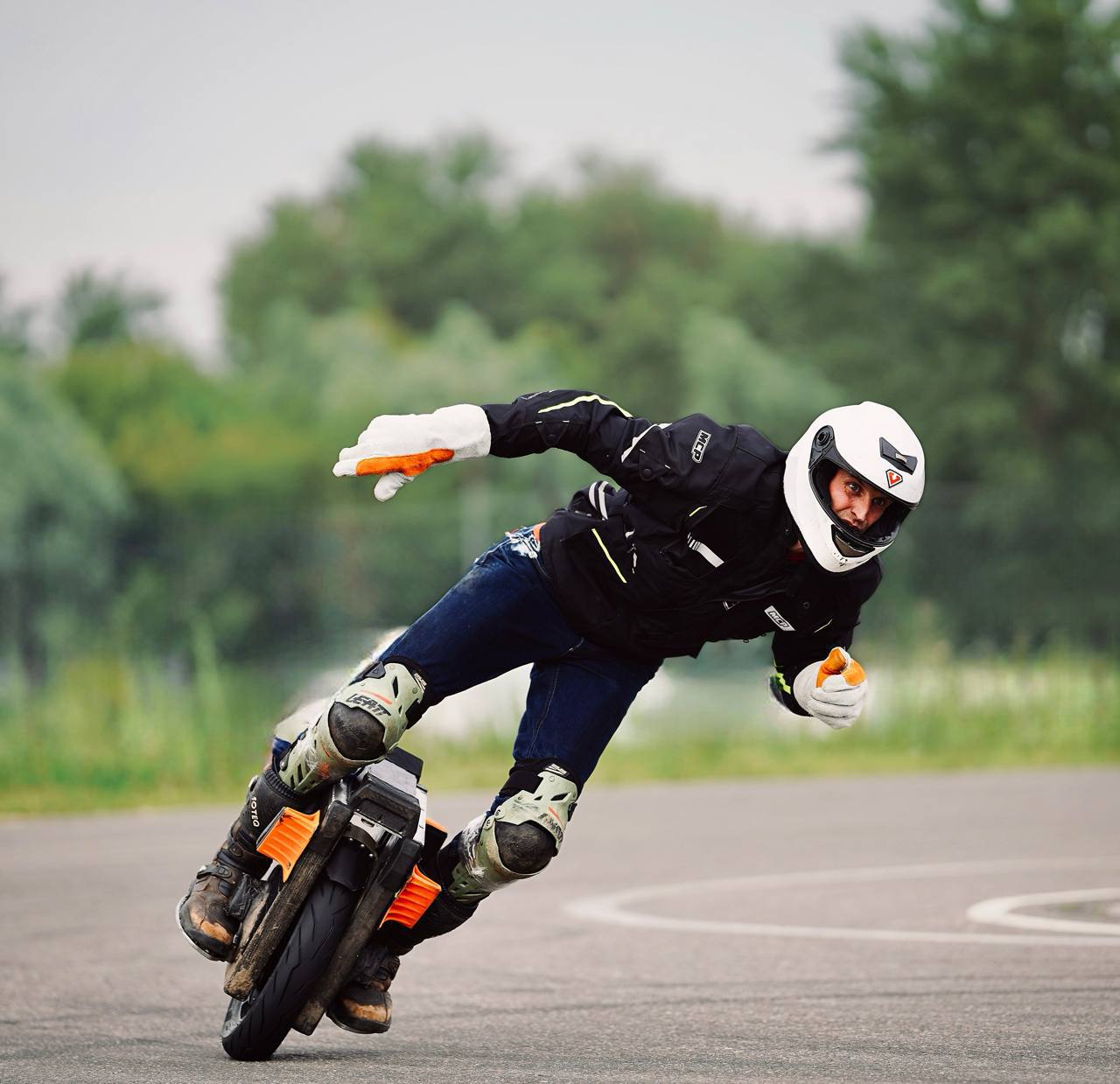
072026

Racing

A wheel built for racing started winning races

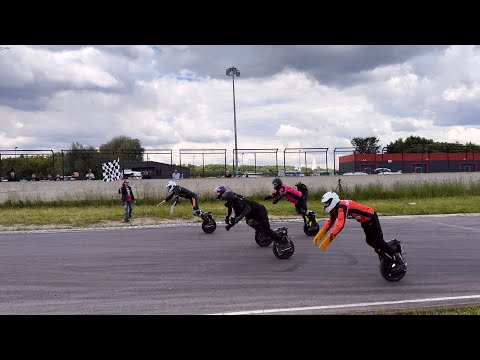
Smirnov took the 2025 season first overall. After that the wins kept coming: the mini-stages at the LeMans karting circuit in March and April 2026, grand finals, the Center for Technical Sports grand prix on 31 May. That grand prix podium went entirely to SV — Smirnov, Dmitry, Entropogen.

In March 2026 the SV168 lined up against the top Chinese models on a track in California.

082025–2026

Tomsk

The first regional branch to be issued an SV168

The federation’s Tomsk branch was the first to be issued an SV168 as a piece of sports equipment, under the programme “Build your branch like Dima did in Tomsk, get an SV”. The brand announced it in July 2026.

03

Records

Six stops — from the first flip on a borrowed wheel to the official world acceleration record.

0116 August 2024

The first front flip on an electric unicycle

Nikita Kovalyk landed the front flip onto a soft big air. The wheel was stock, a 100 V Gotway: the only in-house part was a mode in Smirnov’s firmware. The federation logged the second front flip in history almost a year later — Max @ShaRLoTTaN88_EUC, on 23 July 2025. In January 2026 three riders spun their first front flips on the SV168, into the foam pit at Rampstroy House.

028 May 2025

The first backflip in the world — Anastasia Kovalyk

Anastasia Kovalyk landed the backflip onto a soft fly box: the second flip on a unicycle in history and the first backwards one. The federation logged the world first that same night. The wheel was someone else’s — a stock model with a reworked high-voltage pack; the trick ran on a mode from Smirnov’s firmware.

03September 2025

CTVS lap record — under a minute

Smirnov on the SV151 was the first to break the minute on the CTVS track: 57.22 seconds. A year earlier the best unicycle lap was 1:01.45 — also his, on the pre-production custom.

04October 2025

Top speed — 85 mph by GPS

The night of 8–9 October 2025, an empty highway, telemetry and a GPS logger. The first run went clean: 85 mph confirmed by the logs. On the next attempt, going for 87 mph, the instruments read 91 — the wheel broke through PWM, the pedals dropped out. How the run ended, and what the teardown showed, is in the “136” chapter.

05Spring 2026

2026 season: the podium goes to SV

Wins at the LeMans-style stages in March and April, the season grand final on 31 May with a time attack and a photo finish. The CTVS grand prix podium went entirely to SV: Smirnov, Dmitry SV, Entropogen.

06June 2026

World acceleration record — 0–62 mph in 3.96 s

The FEMS federation officially logged the record: 0–62 mph in 3.96 seconds, set by Alexander Smirnov and Aleksandr Volkov. In the federation’s wording, the SV168 is the fastest and most powerful unicycle ever built. The latest SV record to date.

04

Specifications

The object

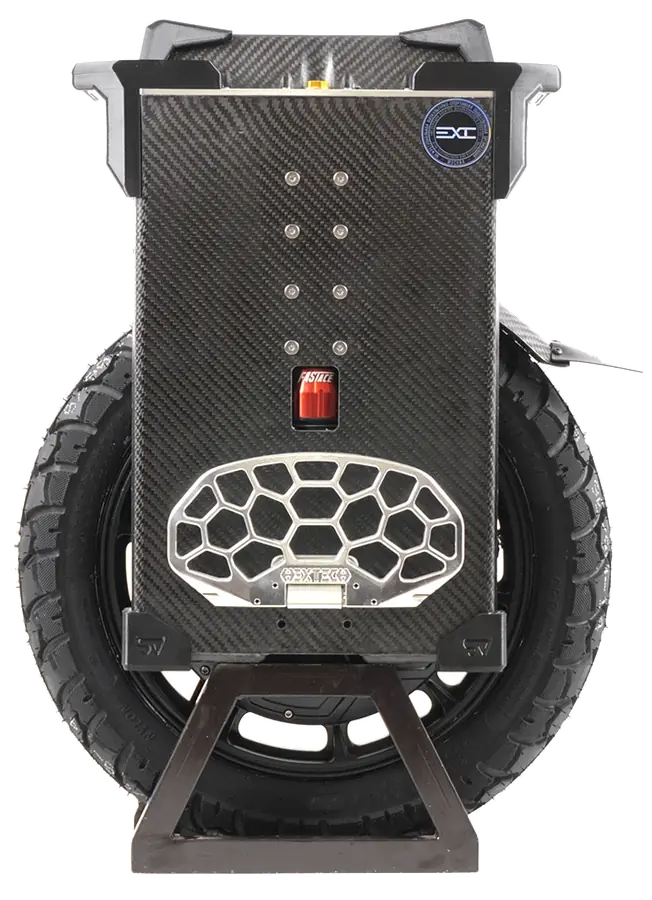
The SV168 wheel on its stand, a full turn around the vertical axis
SV168 · full turnTurntable shoot, 36 positions

Model

Flagship model
SV168
Also available
SV151, SV134
Lineup voltage
168 / 151 / 134 V
PriceGet a quote →
On request

Motor

12″ Patton S: Off-road racing, track and karting circuits

Magnets
2.5×38 mm
Stator iron width
38 mm
Turns per phase
72
Motor weight
22 lb
Free spin, no field weakening
78 mph
Real-world rider speed
up to 62 mph
Motor layout
54 stator teeth / 48 magnets
Power stage
48 FET, 400 A
Peak power
20–30 kW
Speed record (rewound SS, 15 turns)
0 mph

Controller & modes

Controller
sv_ctrl48fet_v_08 — in-house design, by alexovik
Maximum voltage
0 V
Transistors
hyg100n20
MCU
STM32F4
Features
Field-oriented control, hall-less limp mode, extended settings
Cooling
Passive — pin-fin aluminum radiator
Ride modesmodes breakdown →
S / H / C / EXC

Battery

Cells
EVE Energy 40PL
Voltage
0 V
Capacity
0 Wh
Assembly
Hand-built on copper plates
BMS
In-house design: overcharge protection, heavy passive balancing at 200 mA
Charger
Not included with the SV168 — bought separately
Charging
Server power supply (Guli 4875, Skat ZX4875F1); XT-90M output connector; hard maximum 26 A (<4 kW)
Charging time
Depends on charger output. Maximum allowed — 4 kW (~35 min), recommended — 2 kW (~1.2 h). Calculated from actual capacity ≈ 2352 Wh (14.7 Wh × 160 cells)

Chassis

Weight
0 lb
Body material
Carbon fiber, aerospace aluminum, stainless steel
Suspension
Fastace with adjustable compression and rebound, 3.5 in (90 mm) travel, 62/66 lb springs
Tire
Shinko 244 (14/2.75) by default, anything else by agreement with the customer
Arch maximum
100/90 R14 road or 90/100 R14 offroad; studded in winter, up to 512 studs
Arch width
0 in
Overall width across the plate
0 in
Water/dust resistance
IP68
Pedals
Hextech

Connectivity

App
DarknessBot (iOS / Android) — the wheel's official app
Firmware updates
At the factory for now, through DarknessBot later
Lights
Fitted as a paid option, agreed with the customer
Personalization
Plain body surfaces — STL files for add-on parts are available

Motor comparison

Use caseOff-road racing, track and karting circuitsStreet riding, racing, jumpsMore powerful and heavier — racing and jumps
Magnets, mm2.5×382.5×383×42
Stator iron width, mm383842
Turns per phase726354
Motor weight, lb2223.727.4
Free spin, no field weakening, mph789096
Real-world rider speed, mphup to 6271–7578–81
05

Quick Guide

Two rider references, compiled from messages by the developer Alexander Smirnov and the community. Full versions live on their own pages and as PDFs.

06

FAQ

What FAQ would have guessed your question? Ask it your way.

A bot answers from this site's own materials. What it doesn't know goes to the team on Telegram.

07

Team

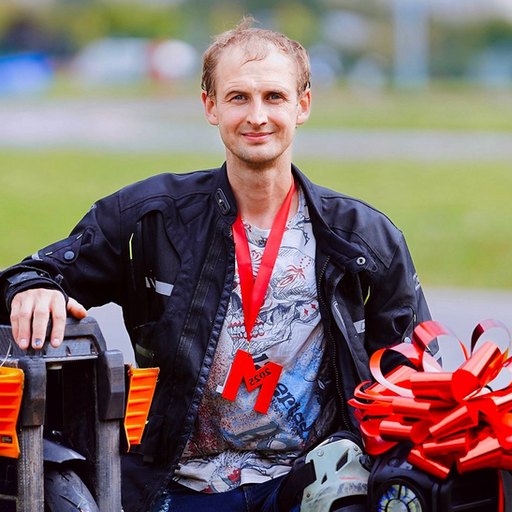
Alexander Smirnov

Alexander Smirnov

Founder, engineer

Always wanted to turn his knowledge of engineering, electronics, and programming into something useful. An experienced racer: he wrote the firmware, built the controller and BMS himself, and wins races on his own wheel, including the 2025 season overall.

Nikita Kovalyk

Nikita Kovalyk

Inspirer and co-founder, PR

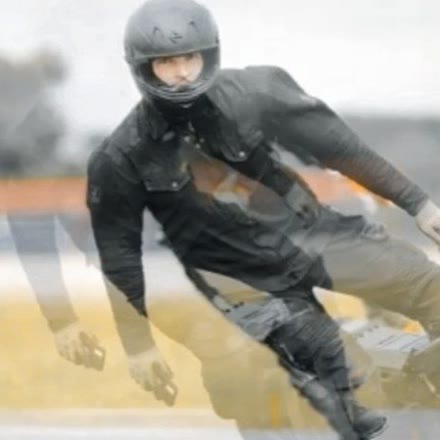
A rider known worldwide, president of the Russian Federation of Electric Unicycle Sport. Drove the development of the custom software that makes tricks on the wheel possible. Landed the first frontflip on an electric unicycle in the world, and holder of the 2025 speed record at 85 mph. Frontflip training on the SV itself is underway now — in a moto foam pit, with a moto-freestyle team.

Sasha Entropogen

Sasha Entropogen

Senior production engineer

Senior production engineer at SV, in charge of motor rewinding and battery assembly. The first to reach 68 mph on a rewound motor. In August 2025 he set a personal lap record at the Center for Technical Sports — 1:03.20 — and climbed four spots into the top 10. A regular on the karting-round podium.

08

Partners

The fan club and the organisations around the project.

General partner

MFSOO FEMS

Interregional Physical Culture and Sports Public Organization — Electric Unicycle Sport Federation

Accredits the series and logs the records.

CT EUC Riders (USA)

The SV fan club in America, Connecticut.

Keith Skottishofficial representative of SmirnoV euc I.T. in the USA

IPU RAS

Institute of Management Problems Russian Academy of Sciences

IPU RAS participates in the project for electric unicycle sport development and innovative mobility.

Nikolai Korginrepresentative of IPU RAS

09

Log

  1. Record06/11/2026

    World acceleration record — 0–62 mph in 3.96 s

    The FEMS federation officially logged a world acceleration record on a wheel: 0 to 62 mph in 3.96 seconds. Set by the SmirnoV euc I.T. team — Alexander Smirnov and Aleksandr Volkov — it makes the SV168, in the federation’s words, the fastest and most powerful wheel ever built.

  2. Event05/31/2026

    Season Grand Final at the Center for Technical Sports — 2026

    The season finale at the Center for Technical Sports, with a time attack and photo finish. All three finalists in the junior category cleared the bar and moved up to pro.

  3. Colorway04/26/2026

    SV168LE — limited detailing edition

    SV168LE (Limited Edition) — a limited detailing package by @Sharapov5, discussed and ordered through the @fc_sv fan club.

  4. Event03/26/2026

    US track day — SV168 against the field

    SUPERWHEEL Track Day at Apple Valley Speedway, California. SV168 lined up against the P6, XMax, and Lynx S — SV’s first public track appearance in the US.

  5. Record01/03/2026

    First frontflip on the SV168 — three riders in one session

    @euc_one, @mutacat, and @ShaRLoTTaN88_EUC spun their first frontflips on the SV168 — into a foam pit. All three had already landed the flip on stock 100 V Gotways; on the new wheel the firmware ran clean.

  6. Firmware12/19/2025

    Fourth riding mode — EXC

    Added a fourth riding mode — X (EXC), built for flips and euc-x-camp: backflip and frontflip are now an official part of the firmware, not a separate hack. English instructions shipped in January 2026.

  7. Record09/09/2025

    Lap record — 57.22

    Alexander Smirnov, on a custom SV151, became the first to break the minute at the Center for Technical Sports — 57.22. Over a year the fastest wheel lap improved from 1:01.45.

  8. Event05/25/2025

    Le Mans at the Center for Technical Sports — season stage 1

    An endurance run: half an hour on track, laps counted. Smirnov covered 23 laps in 29 minutes on a custom SV151 and topped the table, followed by Ilyin, Semyon An, and Dmitry SV.

  9. Event02/28/2025

    The team's first race

    The CIS riders’ team ran its first “mix-karting night” on a rented track: free riding and the first timed runs. From that evening the racing season took off in stages.